
Denon AVR-S760H Manual: Comprehensive Guide
This comprehensive guide details the Denon AVR-S760H, an integrated network AV receiver. It provides setup, connection, and operational instructions,
spanning 279 pages, and is currently available in English as a downloadable PDF.
Welcome to the world of immersive home entertainment with the Denon AVR-S760H! This integrated network AV receiver is engineered to deliver a superior audio-visual experience, seamlessly blending power and convenience. This manual serves as your complete resource, guiding you through every step of setting up and optimizing your new Denon receiver.
The AVR-S760H is designed for both seasoned audiophiles and those new to home theater. It boasts a robust feature set, including support for the latest HDMI standards, advanced room correction technology (Audyssey), and seamless integration with popular streaming services. Whether you’re building a dedicated home cinema or simply enhancing your existing TV setup, the AVR-S760H offers exceptional performance and versatility.
This guide provides detailed instructions on connecting your speakers, video sources, and audio components. It also covers network connectivity, Wi-Fi setup, and utilizing the intuitive HEOS app for multi-room audio control. Prepare to unlock the full potential of your entertainment system with the Denon AVR-S760H and this comprehensive manual.
Key Features and Specifications
The Denon AVR-S760H is a powerhouse of features packed into a sleek design. As an integrated network AV receiver, it supports the latest HDMI standards ensuring compatibility with 8K video and advanced gaming features. It delivers immersive sound experiences, enhanced by Audyssey room correction technology, tailoring the audio output to your specific listening environment.
Key specifications include a 7.2 channel configuration, delivering powerful and precise audio. Network connectivity via Wi-Fi and Ethernet enables seamless access to streaming services and internet radio. The built-in HEOS multi-room audio technology allows for wireless music playback throughout your home. Furthermore, the AVR-S760H boasts a phono input for vinyl enthusiasts, and supports voice control with Amazon Alexa, Google Assistant, and Siri.
This receiver, detailed across 279 pages in its manual, is designed for high-performance, offering durable and sustainable entertainment. It’s a cornerstone for a truly elevated home theater experience.

Setting Up Your AVR-S760H
Proper setup is crucial for optimal performance. This section of the 279-page manual guides users through initial configuration, ensuring a seamless and immersive home theater experience.
Unboxing and Initial Inspection
Carefully unpack your Denon AVR-S760H and verify all components are present. The comprehensive 279-page owner’s manual is included, providing detailed guidance throughout the setup process. Begin by inspecting the receiver for any physical damage that may have occurred during shipping. Check the front panel, rear panel connections, and top surface for scratches or dents.
Confirm the package contains the AVR-S760H unit itself, the remote control, the remote control batteries, the AM antenna, the FM antenna, and the safety instructions. Also, locate the quick start guide which offers a simplified overview of the initial setup steps. Retain all packaging materials for potential future transport or warranty claims.

Before connecting any cables, ensure the receiver is placed on a stable, well-ventilated surface. Avoid direct sunlight and excessive heat. Familiarize yourself with the location of all input and output connections on the rear panel, referencing the manual’s diagrams for clarity. A thorough initial inspection will help ensure a trouble-free setup experience.
Connecting Speakers
Proper speaker connection is crucial for optimal audio performance with your Denon AVR-S760H. Consult the 279-page owner’s manual for detailed diagrams and instructions. Begin by powering off the receiver. Identify the speaker terminals on the rear panel, noting the positive (+) and negative (-) markings.
Use speaker wire of appropriate gauge (refer to the manual for recommendations) and ensure consistent polarity throughout your system. Connect each speaker wire securely to the corresponding terminals on both the receiver and the speakers. Double-check all connections before proceeding. The manual details various speaker configuration options, including 5.1, 5.2, and 7.1 setups.
Pay close attention to impedance matching to avoid damaging the receiver or speakers. Ensure the receiver is set to the correct speaker configuration in the setup menu. Once all speakers are connected, power on the receiver and verify sound output from each speaker individually. Refer to the troubleshooting section of the manual if any issues arise.
Speaker Configuration Options
The Denon AVR-S760H offers flexible speaker configurations to suit various room sizes and preferences, as detailed within its 279-page manual. Common setups include 5.1-channel, providing immersive surround sound with front left/right, center, surround left/right, and a subwoofer. A 5.2 configuration adds two height speakers for enhanced dimensionality.
For larger rooms, a 7.1-channel setup expands the surround experience with additional surround back speakers. The manual provides clear guidance on assigning speakers to specific channels within the receiver’s setup menu. Proper configuration is vital for accurate sound reproduction and optimal spatial audio.
Consider your room’s acoustics and speaker placement when selecting a configuration. The manual also outlines options for bi-amping compatible speakers, potentially improving audio clarity and power. Experiment with different settings to find the configuration that best suits your listening environment and personal preferences. Always refer to the manual for impedance guidelines.
Connecting Video Sources
The Denon AVR-S760H facilitates seamless integration of various video sources, as comprehensively explained in its user manual. Multiple HDMI inputs accommodate devices like Blu-ray players, gaming consoles, and streaming devices. The receiver supports 4K Ultra HD video with High Dynamic Range (HDR) for stunning visual clarity and vibrant colors.
HDMI connections are crucial for both video and audio transmission. The manual details the proper connection procedures, emphasizing the importance of using high-speed HDMI cables to ensure optimal performance. The AVR-S760H also supports Audio Return Channel (ARC) and enhanced Audio Return Channel (eARC), allowing audio to be sent from your TV to the receiver via the HDMI connection.
eARC offers higher bandwidth, enabling the transmission of lossless audio formats like Dolby TrueHD and DTS-HD Master Audio. Refer to the manual for specific eARC compatibility information with your TV model. Proper HDMI configuration within the receiver’s settings is essential for achieving the best possible video and audio quality.
HDMI Connections and ARC/eARC
The Denon AVR-S760H’s manual thoroughly covers HDMI connectivity, vital for modern home theater setups. It stresses using high-speed HDMI cables for 4K UHD and HDR compatibility. The receiver features multiple HDMI inputs, clearly labeled for easy device connection – Blu-ray players, game consoles, and streaming boxes all benefit.
Audio Return Channel (ARC) and enhanced ARC (eARC) are key features. ARC simplifies audio transmission from a compatible TV back to the receiver, reducing cable clutter. eARC, a newer standard, significantly increases bandwidth, enabling lossless audio formats like Dolby TrueHD and DTS-HD Master Audio to be sent from the TV to the AVR-S760H.
The manual provides detailed instructions on enabling ARC/eARC in both the receiver’s settings and your TV’s audio output configuration. Troubleshooting tips are included for common ARC/eARC issues, such as no audio or intermittent dropouts. Correct HDMI cable selection and proper setup are crucial for optimal performance.
Connecting Audio Sources
The Denon AVR-S760H manual details connecting various audio sources, expanding beyond HDMI. Traditional inputs like optical and coaxial digital audio connections are covered, allowing compatibility with older devices. Analog RCA connections are also supported for legacy audio equipment, offering versatility for diverse setups.
A dedicated section explains the phono input setup, crucial for vinyl enthusiasts. The manual clarifies the grounding requirements for turntables to minimize hum and ensure optimal audio quality. It specifies the correct impedance settings for different cartridge types, maximizing the listening experience.
The guide emphasizes proper cable connections and input selection on the receiver. It provides troubleshooting advice for common audio issues, such as low volume or distorted sound. Clear diagrams illustrate the correct wiring configurations for each audio input type, simplifying the connection process for all users.
Phono Input Setup

The Denon AVR-S760H manual dedicates specific instructions to phono input setup, vital for connecting turntables. It stresses the importance of a proper ground connection between the turntable and the receiver’s ground terminal to eliminate hum. Failure to ground correctly can result in noticeable audio interference.
The guide details selecting the correct input on the receiver – specifically labeled “Phono” – and explains the difference between Moving Magnet (MM) and Moving Coil (MC) cartridges. While the AVR-S760H is primarily designed for MM cartridges, the manual may offer guidance on using MC cartridges with an external step-up transformer.
It provides troubleshooting steps for common phono-related issues, such as weak signal or distorted sound. The manual advises checking cartridge alignment and stylus condition. It also highlights the importance of using high-quality RCA cables for optimal signal transfer, ensuring a pristine vinyl listening experience.
Network Connectivity and Setup
The AVR-S760H manual guides users through connecting to a home network, detailing Wi-Fi setup and troubleshooting. It emphasizes utilizing the HEOS app for seamless integration.
Connecting to Your Home Network
Establishing a network connection is crucial for unlocking the full potential of your Denon AVR-S760H. The owner’s manual provides detailed instructions for both wired and wireless setups. For a wired connection, simply connect an Ethernet cable from the receiver’s LAN port to your router. The AVR-S760H will typically obtain an IP address automatically via DHCP.
For wireless connectivity, the manual guides you through accessing the receiver’s network settings via the on-screen display. You’ll need to select your Wi-Fi network from the available list and enter the password. The manual also offers troubleshooting tips for common connection issues, such as incorrect passwords or signal interference. It stresses the importance of a stable network connection for streaming services and HEOS app functionality.
Successfully connecting to your home network enables access to internet radio, music streaming services, and firmware updates, ensuring your AVR-S760H remains up-to-date with the latest features and improvements. The manual clearly outlines each step, making the process accessible for users of all technical skill levels.
Wi-Fi Setup and Troubleshooting
The Denon AVR-S760H manual dedicates significant attention to Wi-Fi setup, recognizing potential challenges. Initial setup involves accessing the network settings through the receiver’s on-screen display (OSD) and selecting your Wi-Fi network. Accurate password entry is emphasized as a primary troubleshooting step. The manual details how to manually input network details if DHCP fails to assign an IP address.
Common issues addressed include signal interference, router compatibility, and incorrect network configurations. The guide suggests repositioning the receiver or router to improve signal strength. It also advises checking router settings for MAC address filtering, which might block the AVR-S760H. If connection problems persist, the manual recommends a factory reset of the receiver’s network settings.
Further troubleshooting involves verifying the router’s firmware is up-to-date and confirming the AVR-S760H supports the Wi-Fi standard used by the router. The manual stresses the importance of a stable Wi-Fi connection for seamless streaming and HEOS app integration, offering detailed solutions for optimal performance.
Using the HEOS App
The Denon AVR-S760H manual extensively covers the HEOS app, highlighting its role in multi-room audio and advanced control. The app facilitates initial receiver setup, including network connection and speaker configuration, streamlining the process beyond the on-screen display. Users can group the AVR-S760H with other HEOS-enabled devices for synchronized audio playback throughout the home.
The manual details how to stream music from various services – Spotify, Pandora, Amazon Music, and more – directly through the HEOS app. It explains personalized playlist creation and management, alongside the app’s ability to control volume, input selection, and playback functions. The guide also illustrates how to access advanced settings, such as EQ adjustments and firmware updates, via the app interface.
Troubleshooting within the HEOS app is also addressed, covering common issues like device discovery problems and audio synchronization errors. The manual suggests verifying network connectivity and ensuring all devices are on the same network. It emphasizes the HEOS app as a central hub for a complete home audio experience.

Operating the AVR-S760H
The manual guides users through the AVR-S760H’s operation, detailing the remote control, on-screen display navigation, and input source selection for a seamless experience.
Remote Control Overview
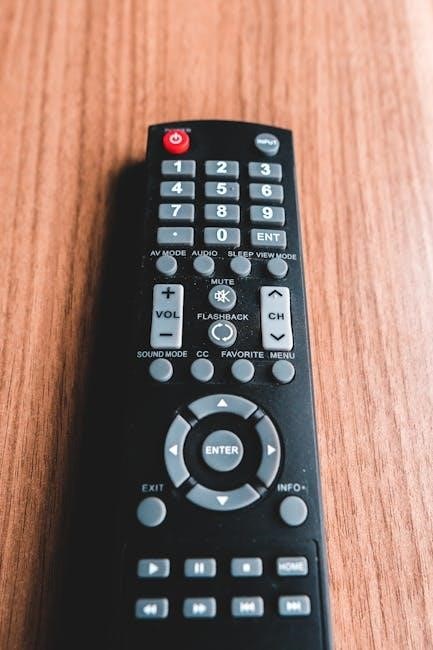
The Denon AVR-S760H’s remote control is your primary interface for managing the receiver’s functions. Understanding its layout and button assignments is crucial for efficient operation. The remote features dedicated buttons for power, input selection, volume control, and playback functions.
Navigation is facilitated by directional buttons and an ‘Enter’ button, allowing you to easily traverse the on-screen display (OSD) menus. Dedicated buttons provide quick access to sound modes, listening presets, and the HEOS multi-room audio platform.
The remote also includes buttons for controlling basic playback functions like play, pause, stop, forward, and rewind. A ‘Setup’ button grants access to the receiver’s configuration settings. Familiarizing yourself with the remote’s functionality will unlock the full potential of your AVR-S760H, enabling you to customize your listening experience and effortlessly manage your home theater setup. The manual provides a detailed diagram illustrating each button’s purpose and function, ensuring a smooth learning curve.
On-Screen Display (OSD) Navigation
The Denon AVR-S760H utilizes a user-friendly On-Screen Display (OSD) for configuration and control. Accessed via the ‘Setup’ button on the remote, the OSD presents a clear, intuitive menu structure displayed on your connected television. Navigation is primarily achieved using the remote’s directional buttons – up, down, left, and right – coupled with the ‘Enter’ button for selection.
The OSD is logically organized into sections, including ‘Setup,’ ‘Audio,’ ‘Video,’ ‘Network,’ and ‘Information.’ Each section contains numerous sub-menus allowing granular control over the receiver’s settings.

Users can adjust speaker configurations, calibrate audio parameters using Audyssey, manage network connectivity, and select input sources all within the OSD. The display provides real-time feedback on selected settings, ensuring accurate configuration. The manual offers a comprehensive walkthrough of the OSD’s menu structure, detailing the function of each option and providing guidance for optimal setup. Mastering OSD navigation is key to unlocking the AVR-S760H’s advanced features.
Input Source Selection
The Denon AVR-S760H offers versatile input source selection, accommodating a wide range of media devices. Users can choose from multiple HDMI inputs, supporting 4K Ultra HD and HDR content, alongside digital audio inputs like optical and coaxial, and even a traditional analog audio input, including a dedicated Phono input for turntables.
Source selection is easily managed via the receiver’s front panel input selector buttons, the remote control, or through the On-Screen Display (OSD). The ‘Input’ button on the remote cycles through available sources, displaying the currently selected input on the front panel display and the OSD.
The AVR-S760H also supports HDMI’s Auto Input Switching feature, automatically detecting when a connected device is powered on and switching to the corresponding input. The manual details each input type, its capabilities, and provides troubleshooting tips for common connection issues. Proper source selection ensures optimal audio and video quality from your connected devices.
Advanced Features and Settings
The AVR-S760H boasts advanced settings like Audyssey calibration, Zone 2/3 setup, and seamless streaming service integration. These features enhance customization and performance.
Calibration and Room Correction (Audyssey)
Audyssey is a crucial feature of the Denon AVR-S760H, designed to optimize audio performance within your specific listening environment. This sophisticated room correction technology analyzes the acoustics of your room, identifying potential issues like reflections, standing waves, and uneven frequency response.
The AVR-S760H utilizes Audyssey’s MultiPoint measurement system. This involves placing the included microphone at multiple listening positions within the room – typically five to eight – and running a series of test tones. The receiver then intelligently measures the response at each location.
Based on these measurements, Audyssey creates a customized equalization (EQ) filter that corrects for the room’s acoustic imperfections. This results in clearer, more accurate, and more immersive sound. The system automatically adjusts channel levels, delays, and EQ settings to deliver the best possible audio experience.
Users can access and configure Audyssey settings through the on-screen display (OSD). It’s recommended to rerun the Audyssey calibration process whenever you make significant changes to your speaker placement or room furnishings to maintain optimal performance. Properly utilizing Audyssey significantly elevates the AVR-S760H’s sonic capabilities.
Zone 2/Zone 3 Setup
The Denon AVR-S760H offers multi-zone capabilities, allowing you to enjoy audio in separate areas of your home – Zone 2 and, depending on speaker configuration, potentially Zone 3. This feature enables independent source selection and volume control for each zone, creating a personalized listening experience throughout your house.
To utilize Zone 2, you’ll need to connect speakers to the designated Zone 2 speaker terminals on the rear panel of the receiver. A separate audio source can then be assigned to Zone 2, independent of the main zone. Control is typically managed through the Denon AVR Remote app or the receiver’s front panel controls.
Zone 3 functionality is more limited and depends on your specific speaker setup. It may require utilizing the main zone speakers for Zone 3 output, potentially sacrificing full independent control. The AVR-S760H’s manual provides detailed instructions on configuring Zone 2 and Zone 3, including source assignment and volume adjustments.
Proper setup ensures seamless audio distribution to multiple areas, enhancing the versatility of your home entertainment system. Remember to consult the manual for specific wiring diagrams and configuration options tailored to your setup.
Streaming Services Integration
The Denon AVR-S760H excels in streaming services integration, offering seamless access to a wide range of popular music and video platforms. Built-in support for services like Spotify, Pandora, Amazon Music, Deezer, and Tidal allows direct playback through the receiver, eliminating the need for external devices.
HEOS, Denon’s multi-room audio platform, is central to this integration. The HEOS app enables browsing, control, and grouping of streaming content across multiple HEOS-enabled devices in your home; This creates a synchronized audio experience throughout different rooms.
Furthermore, the AVR-S760H supports Apple AirPlay 2, facilitating wireless streaming from Apple devices. Voice control compatibility with Amazon Alexa, Google Assistant, and Siri adds another layer of convenience, allowing hands-free operation.
Regular firmware updates ensure continued compatibility with new streaming services and features. The receiver’s network connectivity is crucial for accessing these services; a stable internet connection is required for optimal performance. Detailed instructions on setting up and utilizing these features are available in the AVR-S760H’s manual.
Troubleshooting and Support
This section offers solutions for common issues, a factory reset procedure, and contact information for Denon support. The 279-page manual provides detailed assistance.
Common Issues and Solutions
Experiencing difficulties with your Denon AVR-S760H? This section addresses frequently encountered problems and provides practical solutions to get you back to enjoying immersive audio. A common issue is a lack of sound, often stemming from incorrect speaker connections or muted volume levels – double-check all wiring and ensure the receiver isn’t muted.
Network connectivity problems are also prevalent. Verify your Wi-Fi password, router functionality, and the receiver’s network settings within the HEOS app. If HDMI connections aren’t working, ensure the correct input is selected and that the HDMI cables are securely connected and compatible with ARC/eARC;
The on-screen display (OSD) might not appear; confirm the OSD settings are enabled in the receiver’s menu. For unresponsive remote controls, replace the batteries and ensure there’s a clear line of sight to the receiver. If Audyssey calibration fails, ensure the included microphone is correctly positioned and the room is quiet during the process. Refer to the comprehensive 279-page owner’s manual for detailed troubleshooting steps and diagrams.
Factory Reset Procedure
Need to restore your Denon AVR-S760H to its original factory settings? This procedure erases all personalized configurations, returning the receiver to its out-of-the-box state. Before proceeding, note that all custom settings, network configurations, and Audyssey calibrations will be lost. This is useful for resolving persistent software glitches or preparing the receiver for resale.
To initiate a factory reset, navigate to the “Setup” menu on the on-screen display (OSD) using the remote control. Then, select “General” and locate the “Factory Reset” option. A confirmation prompt will appear; carefully read the warning before confirming your decision. The receiver will power cycle and revert to its default settings.
Alternatively, some models may have a physical reset button located on the rear panel. Consult the comprehensive 279-page owner’s manual for the exact location and procedure specific to your AVR-S760H unit. After the reset, you’ll need to reconfigure all settings, including speaker connections, network setup, and Audyssey calibration.
Contacting Denon Support
Experiencing issues with your Denon AVR-S760H that you can’t resolve independently? Denon provides several avenues for customer support to assist you. The primary resource is the official Denon support website – support.denon.com – offering a wealth of troubleshooting guides, FAQs, and downloadable manuals, including the comprehensive 279-page owner’s manual for the AVR-S760H.
For direct assistance, Denon offers phone support. Check the support website for the most up-to-date contact numbers specific to your region. You can also explore online chat support options, often available during business hours. When contacting support, have your receiver’s model number and serial number readily available to expedite the process.
Furthermore, Denon maintains an active online community forum where users can share experiences, ask questions, and receive assistance from fellow enthusiasts and Denon representatives. Utilizing these resources can often provide quick solutions to common problems and enhance your overall AVR-S760H experience.